Gas vs Electric Commercial Equipment: Which is Best for Your Kitchen?
Building a commercial kitchen requires making dozens of crucial decisions, but one debate stands above the rest. Should you power your culinary workspace with gas or electric equipment?
For decades, the standard response was always gas. Chefs loved the visual feedback of an open flame, and the raw power was unmatched. However, technology has advanced rapidly. Modern electric commercial equipment now rivals gas in power while offering unique benefits in precision and safety.
Choosing the right power source is not just about cooking preferences. It impacts your monthly utility bills, your initial setup costs, and the comfort of your kitchen staff. Let us break down the advantages of both options so you can make the smartest investment for your food business.
The Power of Gas Commercial Equipment
Gas equipment has been the backbone of the global restaurant industry for a very long time. For high volume cooking, especially in traditional Indian, Chinese, and Continental kitchens, gas is often the preferred choice.
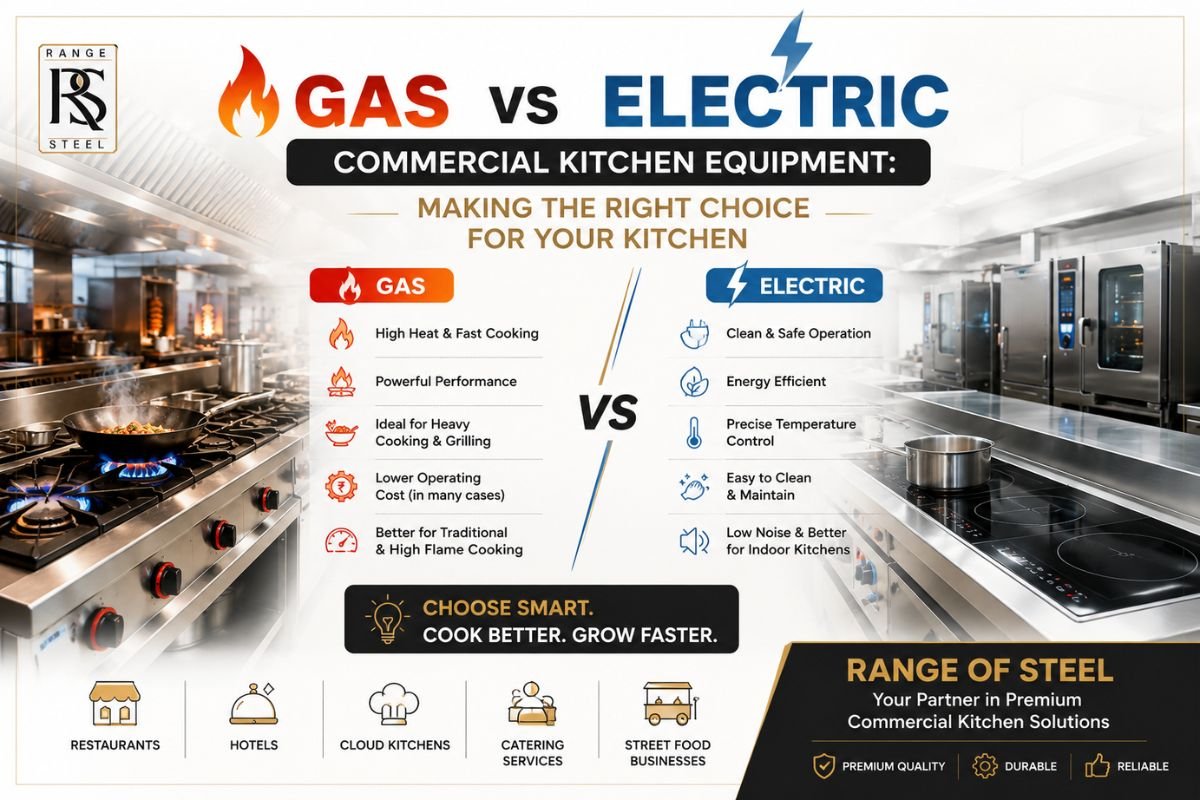
Instant Heat and Visual Control Chefs appreciate the immediate response of a gas burner. When you turn the dial, the flame appears instantly. If you need to drop the temperature to a gentle simmer, the heat reduction happens the exact second you adjust the knob. This visual feedback allows experienced cooks to manage multiple pans simultaneously with great accuracy.
Lower Operating Costs In many regions, commercial gas is significantly cheaper than commercial electricity. If your kitchen operates twelve to fifteen hours a day, the savings on your monthly utility bills can be substantial. Gas equipment also continues to function during electrical power cuts, which is a major advantage in areas with unreliable power grids.
High Heat Cooking Techniques Certain culinary techniques absolutely require an open flame. If your menu features charred kebabs, fire roasted vegetables, or wok tossed noodles that require intense direct heat, gas equipment is non negotiable.
The Rise of Electric Commercial Equipment
While gas has raw power, electric equipment is the master of precision and consistency. As kitchen technology improves, more modern restaurants and cloud kitchens are turning to electric solutions.
Unmatched Precision and Consistency Electric ovens, fryers, and induction cooktops offer pinpoint temperature control. Once you set an electric commercial fryer to a specific temperature, it maintains that exact heat level without fluctuating. This is vital for baking and frying, where a difference of a few degrees can ruin a recipe. Electric equipment ensures that every batch comes out identical to the last.
A Cooler Working Environment A major drawback of gas equipment is that a large portion of the heat escapes into the surrounding air. This makes the kitchen incredibly hot and forces your air conditioning and exhaust systems to work overtime. Electric equipment, especially induction technology, transfers heat directly to the cooking vessel. This keeps your kitchen significantly cooler, creating a much better working environment for your staff and lowering your cooling costs.
Safety and Easy Installation Electric equipment does not produce carbon monoxide, meaning you have far fewer concerns regarding toxic emissions. Furthermore, installing electric equipment is often much simpler. Many high end shopping malls, airport food courts, and office buildings completely ban open gas lines due to fire safety regulations. In these premium locations, going fully electric is your only option.
Key Factors to Consider Before Buying
To decide between the two, you need to look closely at your specific business model and infrastructure.
Analyze Your Menu Your menu dictates your equipment. A bakery producing delicate pastries will benefit massively from the even, consistent heat of an electric convection oven. A bustling biryani house or a fast paced stir fry joint will need the intense, immediate heat of a heavy duty gas range.
Check Your Location Infrastructure Before purchasing any equipment, check what your building can actually handle. Installing a commercial gas line requires specific municipal approvals and heavy duty exhaust hoods. On the other hand, outfitting a large kitchen entirely with electric equipment might require a major upgrade to the electrical panel of the building, which can be very expensive.
Consider Maintenance and Repairs Gas equipment is mechanically simple. It usually features metal valves and basic ignition systems, making it very easy and cheap for local technicians to repair. Electric equipment relies on complex digital circuit boards and sensors. While they are highly reliable, replacing a broken digital component is often more expensive than fixing a blocked gas valve.
The Verdict: Why Not Both
The most efficient commercial kitchens rarely stick to just one power source. The smartest approach is often a hybrid model.
Many successful restaurant owners use gas for their heavy duty cooking ranges and open flame grills to capitalize on the raw power and lower running costs. Then, they utilize electric equipment for their combination ovens, deep fryers, and holding cabinets to take advantage of the digital precision and consistent temperature control.
Your commercial kitchen equipment is a long term investment. By understanding the strengths of both gas and electric systems, you can design a kitchen that maximizes speed, ensures food quality, and keeps your operational costs under control. Take the time to evaluate your menu needs and facility constraints, and you will build a culinary workspace ready for long term success.