
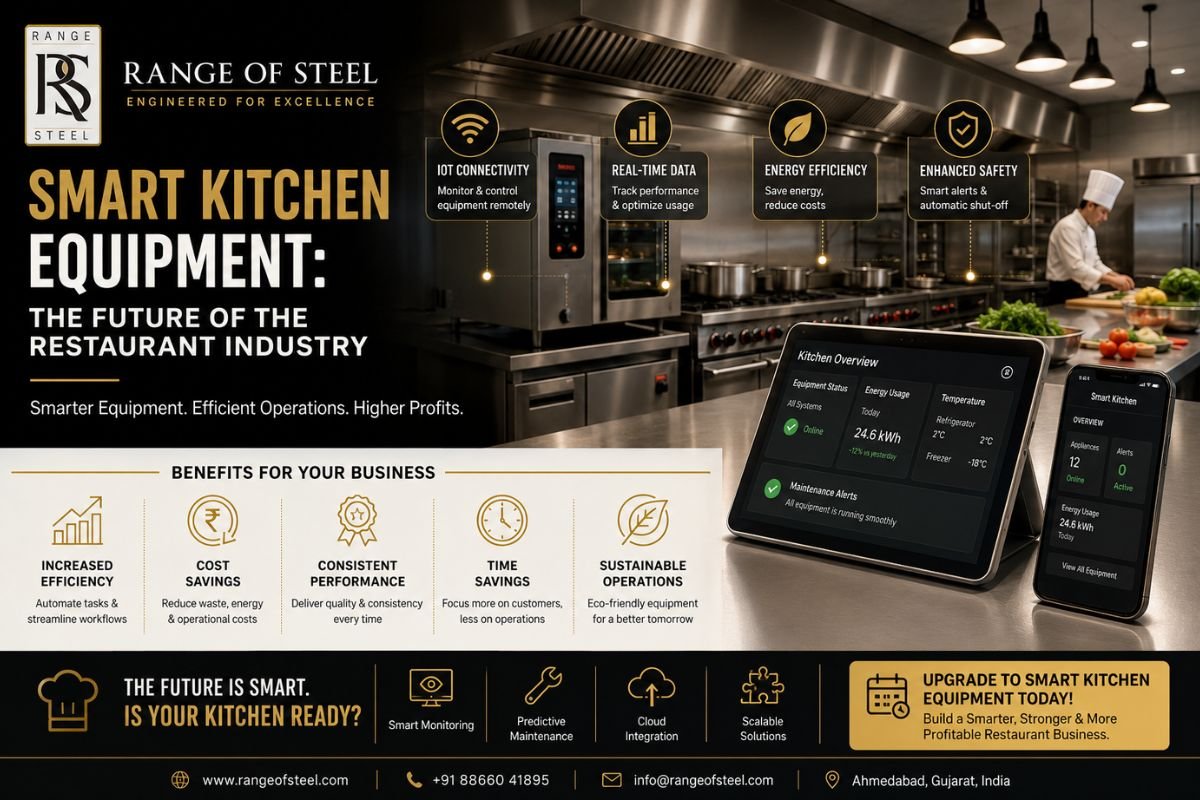
The restaurant industry has always been a space of high pressure, tight margins, and constant motion. For decades, the “back of house” relied on manual labor and the intuition of experienced chefs. However, as we move through 2026, a quiet revolution is taking place. The traditional commercial kitchen is evolving into a connected, data driven ecosystem. Smart kitchen equipment is no longer a luxury for experimental labs; it is becoming the standard for any business looking to survive and thrive in a competitive market.
This shift toward smart technology is driven by the need for consistency, the rising cost of labor, and a global push for sustainability. Here is how intelligent hardware is reshaping the future of culinary spaces.
The Rise of the Internet of Things (IoT) in the Kitchen
The core of a smart kitchen is connectivity. In a traditional setup, a refrigerator is just a cold box. In a smart kitchen, the refrigerator is a node on a network. IoT enabled appliances are equipped with sensors that monitor everything from internal temperatures to humidity levels and door opening frequencies.
For a restaurant owner, this means peace of mind. If a walk in cooler begins to fail at 3 AM, the system sends an instant alert to a smartphone, preventing thousands of rupees in food spoilage. These sensors also track energy consumption, identifying which machines are inefficient and helping managers reduce utility bills.
Automation and Precision Cooking
Precision is the difference between a good meal and a great one. Smart equipment takes the guesswork out of high volume cooking.
- Programmable Combination Ovens: Modern ovens now come with cloud connectivity. A head chef can create a recipe at the main branch and “push” the cooking parameters to ovens at ten different locations. This ensures that a roasted chicken in Delhi tastes exactly like the one in Mumbai, regardless of who is operating the machine.
- Automated Fryers: Intelligent deep fryers now monitor oil quality in real time. They notify staff exactly when oil needs to be filtered or replaced, ensuring food quality stays high while minimizing oil waste.
- Smart Grills: Sensors can now detect the thickness and internal temperature of a protein, automatically adjusting the heat to ensure a perfect medium rare every single time.
Waste Reduction and Sustainability
Sustainability is no longer just a buzzword; it is a financial necessity. Food waste is one of the biggest drains on restaurant profitability. Smart kitchen technology addresses this through better tracking and management.
Integrated scales and AI cameras can now track what is being thrown into the bin. By analyzing this data, the system can tell a manager if they are over prepping certain ingredients or if a specific dish is consistently being sent back half eaten. Over time, this allows for hyper accurate inventory ordering, ensuring that the kitchen only buys what it truly needs.
Solving the Labor Shortage
The hospitality industry globally, and in India specifically, is facing a significant shortage of skilled kitchen staff. Smart equipment acts as a force multiplier. When a machine can handle the repetitive, time consuming tasks like monitoring a stock pot or stirring a sauce, the remaining staff can focus on plating, creativity, and customer service.
Automated equipment reduces the “onboarding” time for new employees. With touch screen interfaces and step by step digital instructions built into the machines, a junior cook can perform complex tasks with minimal supervision, maintaining the restaurant’s high standards from day one.
Predictive Maintenance
One of the most frustrating experiences for a restaurant manager is a machine breaking down in the middle of a Friday night rush. Smart equipment uses predictive analytics to prevent this. Instead of waiting for a breakdown, the equipment monitors its own components. It can detect if a motor is vibrating unusually or if a heating element is taking too long to reach the target temperature. The system then schedules a service call before the part actually fails, keeping the kitchen running without interruption.
Data Driven Decision Making
In the future, the most successful restaurants will be the ones that understand their data. Smart kitchens generate a wealth of information. Managers can see exactly how long it takes for a dish to go from order to pass, which stations are bottlenecks, and what time of day energy usage peaks.
This data allows for “smart scheduling.” If the data shows that the prep station is underutilized on Tuesday mornings, the manager can adjust staffing levels accordingly. It turns the kitchen from a place of “gut feeling” into a precision tuned production line.
The Road Ahead
While the initial investment in smart kitchen equipment can be higher than traditional gear, the return on investment is clear. Between reduced food waste, lower energy bills, and consistent quality that keeps customers coming back, the technology pays for itself.
The future of restaurants is not about replacing chefs with robots; it is about empowering chefs with better tools. A smart kitchen is faster, safer, and more profitable. For business owners in India looking to scale their brands, embracing this digital transformation is the key to building a resilient and future proof food business. The era of the “connected cookline” has arrived, and it is changing the way we think about professional cooking forever.