
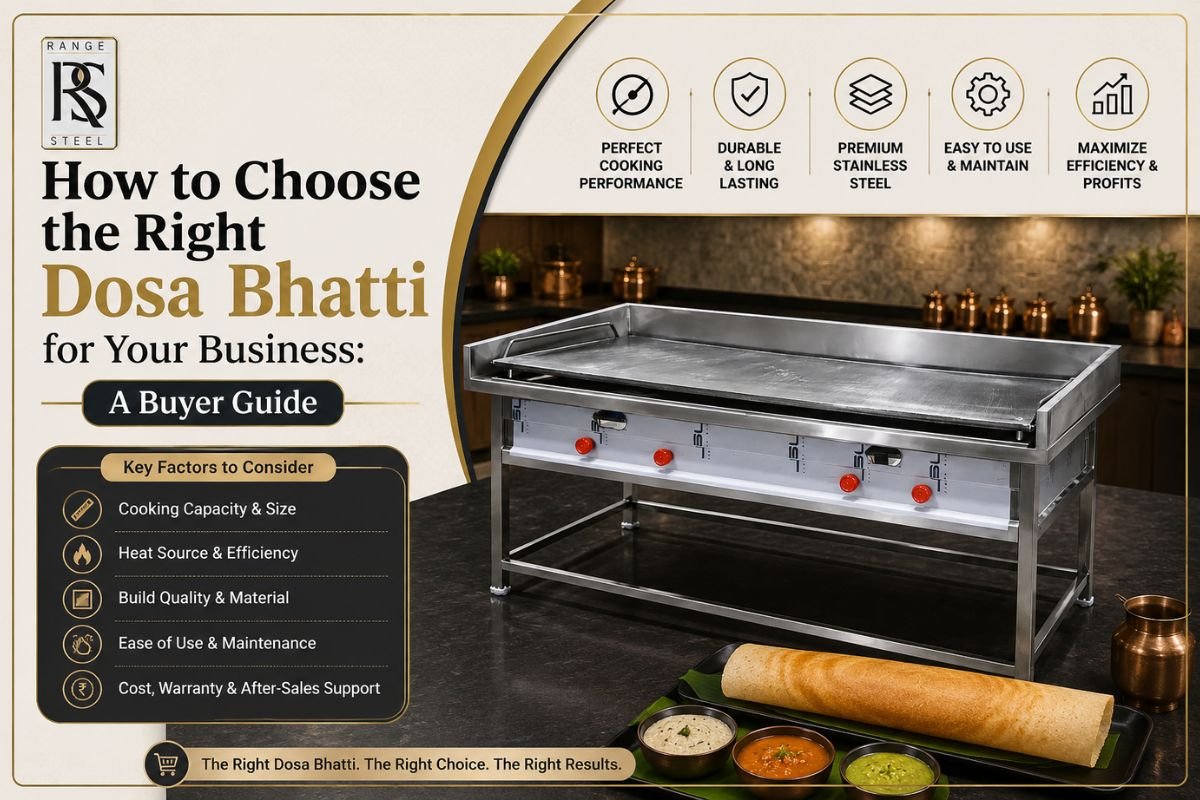
In the world of Indian street food and fine dining alike, the Dosa holds a special place. For a restaurant owner, the quality of your Dosa is often defined by the equipment you use to make it. The Dosa Bhatti, or commercial Dosa plate, is the heart of any South Indian breakfast operation. While it might look like a simple flat metal surface, the engineering behind a professional grade Bhatti determines whether your Dosa comes out golden and crisp or soggy and uneven.
Choosing the right equipment requires a balance between your expected customer volume, your kitchen space, and your long term operational costs. Here is a comprehensive guide to help you navigate the selection process.
Understanding the Plate Material
The most critical component of a Dosa Bhatti is the top plate. This is where the magic happens, and the material used here affects heat retention and distribution.
- Mild Steel Plates: Most commercial establishments prefer heavy duty mild steel. It is excellent for seasoning, which creates a natural non stick surface over time. It can withstand high temperatures without warping, making it ideal for continuous use.
- Cast Iron Plates: These offer the best heat retention. Once a cast iron plate gets hot, it stays hot, allowing for faster cooking times during peak hours. However, they are much heavier and require careful maintenance to prevent rusting.
- Polished Finishes: Look for plates that come with a smooth, polished finish. A rough surface will cause the batter to stick, leading to torn Dosas and frustrated chefs.
Size and Capacity Planning
The size of your Dosa Bhatti should align with your menu and your seating capacity. You do not want a plate so small that customers have to wait, nor so large that it wastes fuel during slow hours.
- Single vs Multiple Burners: For a small cafe or a tiffin center, a two foot or three foot single burner plate might suffice. However, busy restaurants often opt for four foot to six foot plates with multiple independent burners.
- Width Considerations: If you specialize in “Paper Dosas” or “Family Dosas,” you will need a wider plate, typically 24 inches or more in depth, to accommodate the larger diameter of the batter spread.
Fuel Efficiency and Burner Type
In a commercial kitchen, fuel is a major recurring expense. The way a Bhatti consumes gas can significantly impact your monthly margins.
- V-Shape or U-Shape Burners: High quality Dosa Bhattis use specifically designed burners that distribute flames evenly across the entire underside of the plate. This prevents “hot spots” where one part of the Dosa burns while another remains undercooked.
- Individual Controls: If you have a large plate, ensure it has multiple control valves. This allows you to turn off half the plate during slow afternoon hours while keeping the other half ready for occasional orders.
The Importance of Plate Thickness
One mistake many new entrepreneurs make is choosing a thin plate to save money. In a professional setting, a thin plate is a liability.
- Uniform Heating: A thick plate (usually 10mm to 16mm) acts as a thermal mass. It absorbs heat and spreads it out evenly.
- Durability: Thick plates are less likely to warp under the constant stress of high heat and the cooling effect of wet batter. A warped plate will have low points where oil collects, resulting in uneven frying.
Build Quality and Hygiene
Since a Dosa Bhatti is a permanent fixture in your kitchen, the frame and body must be built to last.
- Stainless Steel Body: Ensure the outer body is made of high grade stainless steel. This makes it resistant to the salt and moisture common in Indian kitchens and allows for easy cleaning at the end of the day.
- Oil Collection Trays: A good design includes a perimeter gutter or a dedicated tray to collect excess oil and batter scrapings. This keeps your workstation clean and prevents oil from dripping onto the floor or into the burners.
- Insulation: Quality units feature glass wool insulation between the burners and the outer body. This keeps the exterior relatively cool, protecting your staff from accidental burns and keeping the overall kitchen temperature lower.
Height and Ergonomics
The comfort of your chef directly impacts the quality of the food. A Dosa master spends hours standing over the heat, spreading batter with precision.
- Stand Height: Most commercial Bhattis come with a sturdy stand. Ensure the height is ergonomic (usually around 30 to 34 inches) so the chef does not have to lean over awkwardly.
- Portability: If you run a catering business or a food truck, look for models with heavy duty wheels and locks so you can move the equipment safely.
Maintenance and Seasoning
Before you start serving, a new Dosa Bhatti requires “seasoning.” This involves heating the plate and applying oil and water repeatedly to create a slick surface.
When choosing a supplier, ask about the initial setup. A well built Bhatti should be easy to scrape clean with a metal spatula without damaging the surface. Avoid plates with deep grooves or visible welding seams on the cooking surface, as these are impossible to keep hygienic.
Investing for the Future
While it may be tempting to buy the cheapest option available, your Dosa Bhatti is an investment in your brand reputation. A reliable machine ensures that the hundredth Dosa of the day looks and tastes exactly like the first one.
Focus on a balance of heavy duty construction, fuel efficiency, and ease of cleaning. By choosing a Bhatti that fits your specific volume and space, you create a smoother workflow for your kitchen team and a better experience for your customers. Success in the food business is built on consistency, and the right equipment is the foundation of that consistency.